 Behind the scenes of Eric Greitens’ decision to resign: ‘No one saw it coming‘
Missouri state lawmakers investigating Gov. Eric Greitens had just finished another marathon public hearing on May 29 when House Speaker Todd Richardson unexpectedly summoned them to his office.
Richardson sat in the window sill of his third-floor Capitol office, backlit in the mid-afternoon light as smoke wafted from his cigarette.
The group of Republican and Democratic legislators gathered round. Richardson asked if everyone was there. An aide shut the door.
“The governor is resigning,” the speaker said.
Additional coverage:
Nonprofit linked to Missouri governor raises new questions about ‘dark money,’ ethics
Questions mount on list of charity donors at center of Greitens ethics fine
Analysis: Gov. Eric Greitens’ first session undercut by ethics questions
Greitens’ penchant for secrecy goes digital with messaging app that leaves no trace (Kansas City Star, Dec. 7, 2017)
Gov. Eric Greitens and his senior staff use an app that deletes text messages after they’ve been read, raising concerns among transparency advocates that it could be used to subvert Missouri open records law.
The app, called Confide, allows someone to send a text message that vanishes without a trace after it is read. It also prevents someone from saving, forwarding, printing or taking a screenshot of the text message.
Because the app is designed to eliminate a paper trail, it is impossible to determine whether the governor and his staff are using it to conduct state business out of view of the public, or whether they’re using it for personal and campaign purposes.
Follow up coverage:
Greitens’ office’s response to public records requests: Deny, delay, set high fees
Lawsuit alleges Gov. Greitens conspired to violate Missouri open records laws
Greitens admits using secret texting app with staff but says he didn’t violate laws
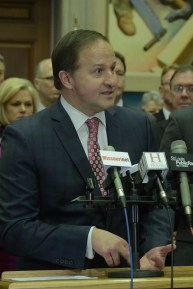 Dozens of women say they were sexually harassed while working in the Missouri Capitol (Kansas City Star, June 26, 2015)
First came a hand on her back. Then on her leg. When fingers inched higher, Sarah Felts bolted.
She was a 21-year-old intern in the Missouri Capitol out for drinks with co-workers.
A few legislators showed up. Felts found herself alone with one lawmaker after the crowd thinned.
That’s when he touched her, and she hurriedly conjured excuses to get away.
She had to use the restroom, get back to the office. She faked a smile.
Soon she was in her car, crying.
“It makes me feel kind of slimy that I didn’t say something,” she said, “and didn’t speak up for myself.”
Follow up coverage:
Missouri House Speaker John Diehl admits sexually charged relationship with intern
Missouri House Speaker John Diehl resigns over intern texts
Interns accuse Sen. Paul LeVota of sexual harassment and retaliation
Sen. Paul LeVota of Independence resigns amid sexual harassment accusations
Missouri House is developing new intern rules to prevent sexual harassment
Out-of-state political consultants helped direct Josh Hawley’s Missouri AG office (Kansas City Star, October 31, 2018)
Josh Hawley pledged to Missouri voters in 2016 that he was not the kind of career politician who would use “one office to get to another.”
But within weeks of Hawley’s swearing in as the state’s top law enforcement official, the high-powered political team that would go on to run his U.S. Senate campaign had stepped in to help direct the office of the Missouri attorney general — and raise his national profile.
Hawley’s out-of-state political consultants gave direct guidance and tasks to his taxpayer-funded staff, and followed up to ensure the tasks were completed, according to emails, text messages and other records obtained by The Kansas City Star.
Follow up coverage:
Missouri Secretary of State begins investigation into Josh Hawley
Missouri Secretary of State enlists auditor’s subpoena power to investigate Hawley
Loophole hides trail of lobbyists’ largesse (Kansas City Star, April 9, 2013)
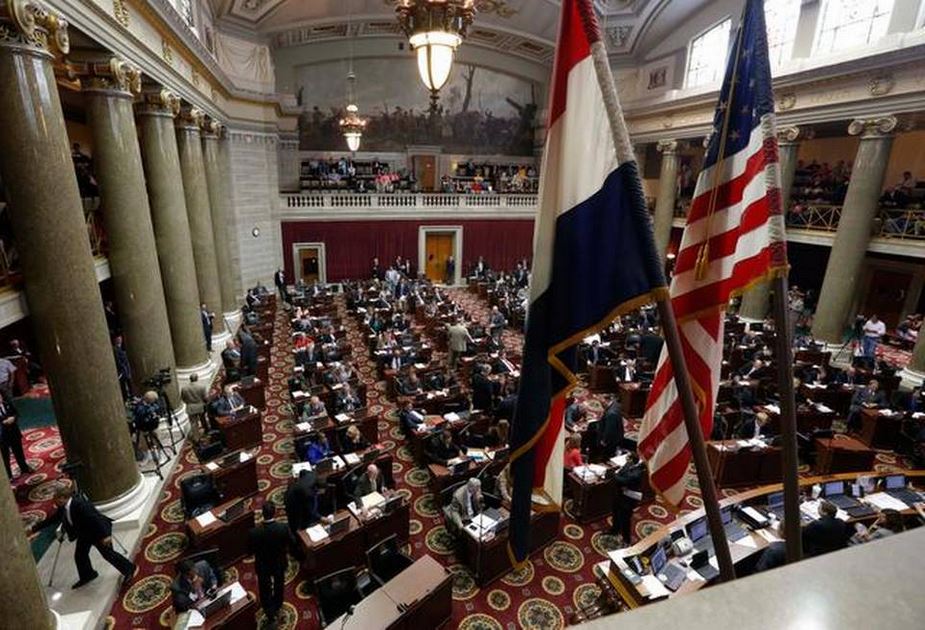 Republican leaders of the Missouri House enjoyed a pair of dinners at an expensive Columbia steakhouse in February, racking up a combined tab of $3,500 picked up by lobbyists for Ameren Missouri and the Missouri One Call System.
But the disclosure reports the lobbyists must file with the state made no mention of which lawmakers dined and passed the check.
Instead, the gifts were reported as going to the “Leadership for Missouri Issue Development” committee, a new type of legislative group that, among other things, creates another hurdle to pinpointing the beneficiaries of lobbyist expense accounts.
Follow up:
Speaker’s company raises ethics issues
No-limit legislature stokes debate over ethics reform
Missouri speaker bans lobbyist-funded meals in House committees
Ethics reform gains momentum in Missouri in aftermath of intern scandals
Ten Missouri megadonors drive largest political contributions
Authorities missteps, on top of years of racial tension, fueled unrest in Ferguson (Kansas City Star, Aug. 16, 2014)
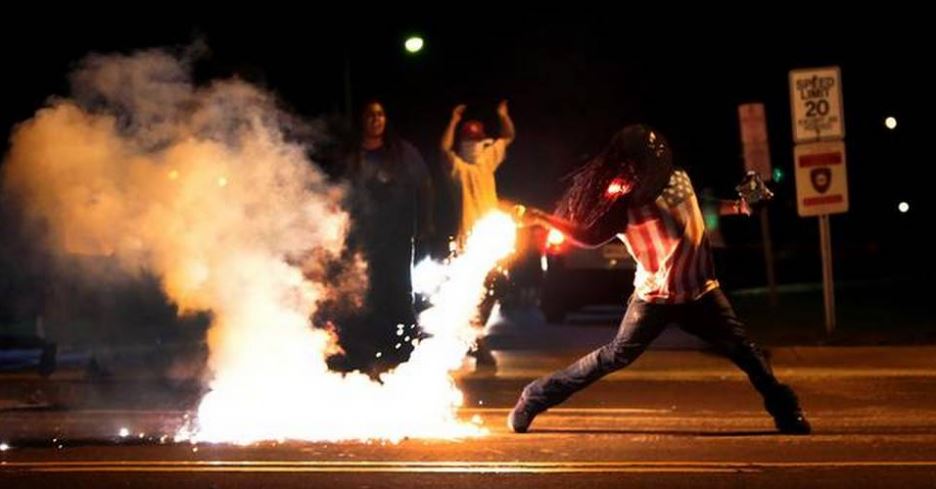 FERGUSON, MO. The Rev. Tommie Pierson was meeting in his church a week ago Saturday when, only blocks away, multiple bullets fired from a Ferguson police officer’s pistol pierced the body of Michael Brown, leaving the unarmed African-American teen dead on the street.
“Not until I saw the news that night and saw how many times the boy had been hit, and that they left him in the street for hours, did I know this was going to be something more than average,” Pierson said.
But by that time, anger in this St. Louis suburb had begun to boil.
No one reached out to Pierson. Not the mayor. Not police. Not county officials. But the pastor at Greater St. Mark Family Church knew he needed to do something.
Follow Up:
Protests grow violent in Ferguson after grand jury announcement
When urban and rural areas play politics, country clout wins out (Kansas City Star, Dec. 12, 2014)
 Same-sex couples are getting married in Kansas City and St. Louis, and local laws passed years ago protect them from discrimination there.
City leaders think it’s past time for those rights to go statewide.
They want tighter rules about where and when someone can tote a gun in the city. They want expanded economic incentives to help lure jobs into the urban core. They want tougher regulations on payday lenders.
Yet when they press their case at the statehouse on these and a host of other issues, they always seem to come up short.
On Missouri taxes and education policies, Rex Sinquefield’s clout is growing (Kansas City Star, July 20, 2014)
 When Rep. Nate Walker started seeing ads questioning his conservative bona fides pop up in his rural northeast Missouri district, he knew exactly what was coming.
The Kirksville Republican running for a second term was one of 15 GOP legislators who sided with Democrats last year to sustain Democratic Gov. Jay Nixon’s veto of a tax cut bill.
For that, he earned the scorn of Rex Sinquefield. Or at least his money.
The Missouri Club for Growth, a conservative group funded largely by Sinquefield, paid for the TV ads criticizing Walker. Then it donated $50,000 to the campaign of his opponent in the Aug. 5 Republican primary.
Blame spread wide on Mamtek (St. Louis Post-Dispatch, Dec. 4, 2011)
No one disputes that the deal to lure a Chinese company to Moberly to build a sweetener factory was marked with warning signs. From shaky financing promises to questions about the existence of the company’s factory in China, chances to delay or kill the plan surfaced at least weeks in advance.
“Starting to sound a bit fishy??” an official with the Missouri Department of Economic Development wrote to a Moberly official in May 2010, as questions about the project persisted.
Doug Gross a polarizing figure for Iowa GOP (Iowa Independent, Dec. 21, 2009)
He was the chief of staff to the longest serving governor in Iowa’s history and the Republican Party’s 2002 gubernatorial nominee. He is a major GOP donor and a respected political strategist in Iowa and around the country.
But over the last year Doug Gross has become one of the most polarizing figures in Iowa Republican politics. While still an influential figure, especially among the party’s elite, Gross has become public enemy No.1 for many grassroots conservatives and evangelical Christians.
Iowa-based conservative advocacy group includes masterminds of Swift Boat and Willie Horton ads (The Iowa Independent, Aug. 19, 2008)
A network of Iowa Republicans is playing a leading role in a secretive group advocating nationally on behalf of “conservative and free market ideals” in congressional races around the country. Among the group’s leaders are two media consultants who played key roles in the Swift Boat Veterans for Truth ads in 2004 and the Willie Horton ad in 1988, both of which helped defeat Democratic presidential candidates.
Toxic coal ash dumps face few regulations in Iowa (The Iowa Independent, March 18, 2009)
When a billion-gallon wave of toxic coal ash burst from a Tennessee power plant’s retention pond in December, the nation’s attention was drawn to the dangers of waste generated by coal-burning power plants. While a disaster of that scale is unlikely in Iowa, the Hawkeye state does face another, some say more dangerous, threat.
At four disposal sites across the state, coal ash is being stored in unmonitored and unlined containment facilities, raising concerns that dangerous materials in the ash could poison groundwater supplies, damage ecosystems and jeopardize human health.
 Jason Hancock